
How to Prepare Your Houston Home to Sell in 2026
How to Prepare Your Houston Home to Sell in 2026
Most sellers think they know what preparing a home to sell looks like. They declutter, they touch up the paint, they maybe plant some fresh flowers by the front door, and they call it ready. In markets where any home with a roof and a street address sells itself, that approach is fine. Houston in 2026 is not that market.
I am Sharon Yeary, Texas Broker and Broker/Owner of Sharcom Realty. I hold a HAR Platinum designation from the Houston Association of REALTORS and have been licensed in Texas real estate for more than 26 years. I am a certified instructor at Champions School of Real Estate, a Contract Instructor and Facilitator with the Texas Association of REALTORS, and an AI-certified real estate professional. I have listed and sold homes across the greater Houston area through multiple market cycles, and I have watched sellers make the same preparation mistakes repeatedly while watching other sellers, the ones who prepared strategically, walk away from closing with more money and fewer headaches than anyone expected.
This post covers what I actually tell my Houston sellers before a listing goes live. Not the generic version. The real version, built on 26 years of watching what works and what costs sellers money.
The Preparation Mistake That Costs Houston Sellers the Most
Before anything else, I need to address the misunderstanding that sends sellers in the wrong direction before the preparation process even starts. It is not a small mistake. It is the mistake that determines whether a seller spends their pre-listing budget wisely or burns it on things that do not move buyers.
Cosmetic Upgrades Are Not What Houston Buyers Are Evaluating
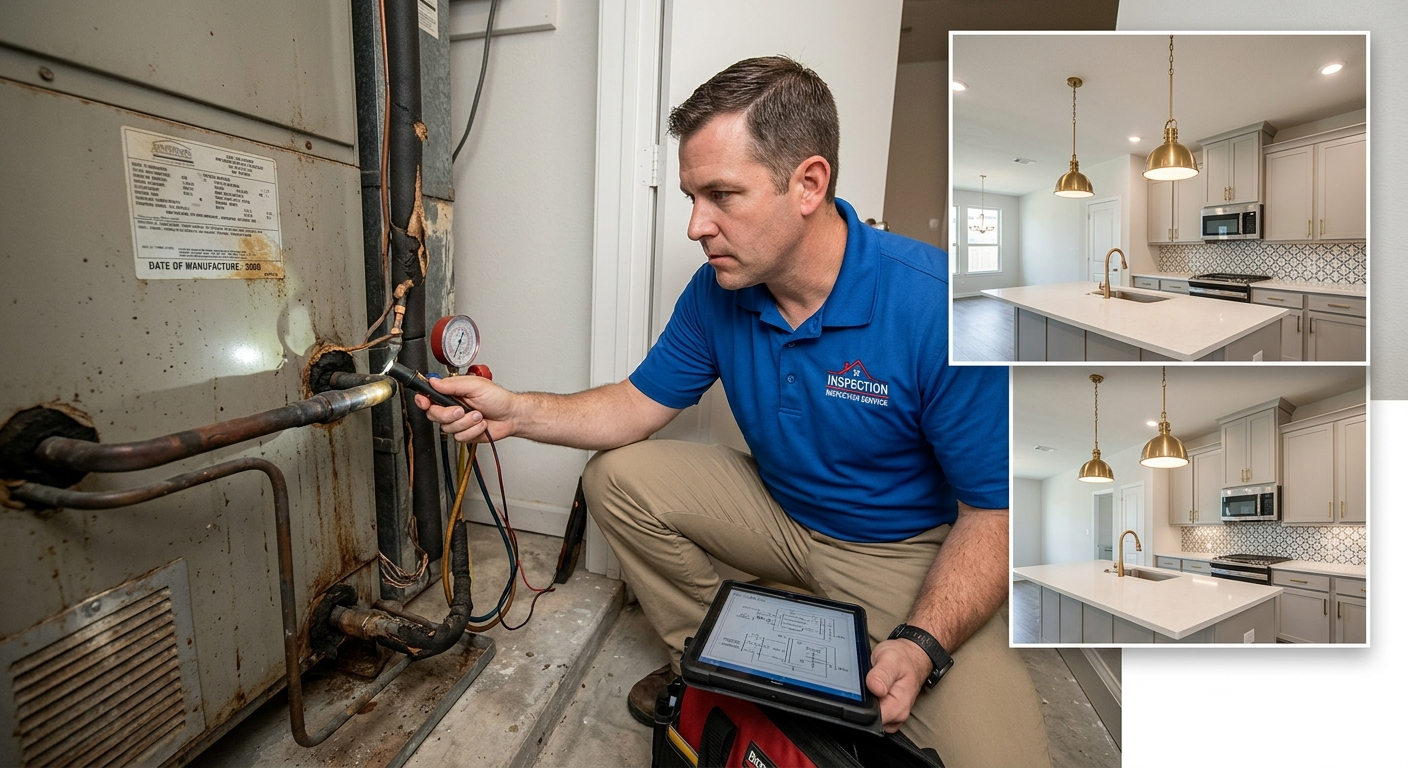
Houston sellers consistently over-invest in cosmetic improvements and under-invest in the mechanical and structural issues that Houston buyers actually lose sleep over. New backsplashes, updated light fixtures, fresh landscaping, trendy accent walls — these things photograph nicely and generate compliments during showings. They do not generate offers when the home inspector finds a 16-year-old air conditioning system, a roof with three years of life left, or a foundation that needs documentation.
I had a seller a few years ago who spent just over $14,000 on a kitchen refresh before listing. New countertops, cabinet hardware, under-cabinet lighting, a tile backsplash that looked genuinely beautiful in the listing photos. The home went on the market, showed well, and received an offer in the second week. Then the inspection happened. The buyer's inspector flagged both HVAC units as end-of-life and noted visible settlement on one side of the slab that had not been evaluated by an engineer. The buyer came back with a $22,000 repair request. My seller had spent $14,000 making the kitchen look newer and had nothing left to address the issues that actually determined whether the deal would close. We negotiated our way through it, but my seller netted significantly less than they would have if we had reallocated even half of that kitchen budget toward the issues that actually mattered.
What Houston Buyers Are Actually Scrutinizing Before Making an Offer
Houston buyers in 2026 come into showings with a specific checklist running in the background, and it is not the backsplash. In a market shaped by Harvey and the freeze events of recent years, and in a climate where air conditioning is not a comfort feature but a survival necessity from April through October, buyers are evaluating a Houston home through a lens that sellers from other markets often do not anticipate.
Before a buyer in today's Houston market falls in love with a home, they are thinking about the following:
When was the roof replaced and what is its current condition
How old are the HVAC systems and when were they last serviced
What is the property's flood zone designation and does it have a flood history
Has the foundation been evaluated recently and is there documentation
What is the age and condition of the water heater
Are there any visible signs of moisture intrusion, particularly in the attic and at window frames
Sellers who address these questions proactively, through repairs, documentation, or transparent disclosure, move through the transaction faster and with far fewer surprises than sellers who hope the inspector does not notice.
The 60 to 90 Day Rule: Why Houston Sellers Who Rush Always Pay for It
The second most consistent mistake I see is sellers who call me three weeks before they want to list and expect to be ready. The emotional logic makes sense. They have been thinking about selling for months, the decision finally feels right, and they want to move. The problem is that their internal timeline and the preparation reality are not the same thing.
What the Right Preparation Timeline Actually Looks Like
The sellers who get the best outcomes in the Houston market — fastest days on market, fewest inspection surprises, cleanest closings, and highest net proceeds — start the preparation process 60 to 90 days before their target list date. That window is not padding. Every part of it is used.
The first two to three weeks go toward a pre-listing inspection. Not the buyer's inspection, which happens after the offer, but a seller-commissioned inspection done before the home goes on the market. A pre-listing inspection tells sellers exactly what a buyer's inspector is going to find, while there is still time to repair it, price for it, or disclose it strategically rather than reactively. Sellers who invest in a pre-listing inspection are almost never surprised at the option period. Sellers who skip it frequently are.
The following three to four weeks go toward completing the repairs that are worth doing and documenting the ones that are not. A leaking bathroom faucet gets fixed. A functioning but aging HVAC system gets serviced and documented so that a service record is available at showing. A foundation with prior pier work gets an updated engineering letter confirming stability. These are not expensive interventions, but they eliminate the three most common buyer objections before those objections ever reach the negotiating table.
The final two to four weeks go toward staging, professional photography, listing copy, and marketing strategy. When a home photographs for the MLS, it should be the version of itself that reflects genuine preparation, not a version where half the closet contents have been shoved under beds and the staging furniture arrived the morning of the shoot.
The Real Cost of Listing Before You Are Ready
I have seen what happens when sellers skip the preparation timeline and go to market before they are ready. The home shows poorly in the first week, which is the week that generates the most buyer traffic on any new listing. It sits. Days on market accumulate. Buyers who might have offered at or above list price in the first week are now asking why the home is still available and what is wrong with it. The seller either reduces the price or accepts a lower offer than the market would have supported if the home had been properly prepared at launch.
There is a window of maximum buyer interest that opens when a home hits the MLS and closes about ten days later. Sellers who are not ready for that window pay for the missed opportunity every time.
Houston-Specific Preparation Issues Most Sellers Do Not Think About
If you have sold a home in another state or in a different region of Texas, there are preparation considerations unique to the Houston market that may not be on your radar. I cover all three of these with every seller I work with, without exception.
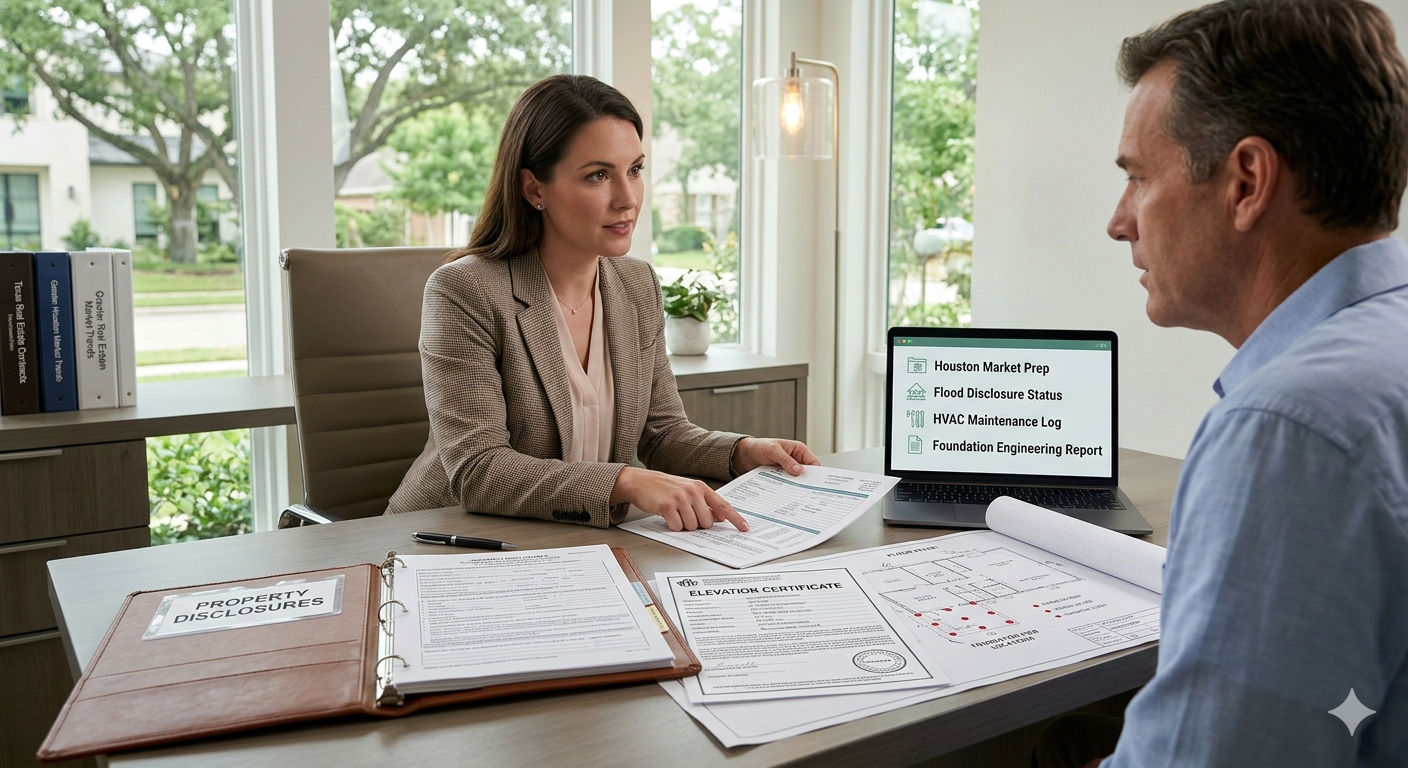
Flood History and Elevation Certificates
Houston buyers ask about flooding before they ask about almost anything else. This is not irrational. The Houston area's history with significant flood events has made flood risk a primary concern for buyers at every price point, and a seller who is not prepared for this conversation is at an immediate disadvantage.
If your property has flooded, the disclosure obligation under Texas law requires you to be transparent about it. The sellers I counsel never try to minimize or obscure flood history. Instead, we present it fully, we document what was done in response, and we price the home in a way that reflects the disclosed history accurately. Buyers who receive honest and complete flood information from a seller, rather than discovering it later, are far more likely to move forward than buyers who feel a seller was not upfront.
If your property has not flooded, having documentation ready that supports that fact is equally important. An elevation certificate from a licensed surveyor showing the property's elevation relative to the base flood elevation is a meaningful document for buyers in flood-prone areas of the Houston metro, and sellers who have one ready at the time of listing rather than scrambling to obtain one during the option period move faster.
HVAC Condition Is a Deal Killer in the Houston Climate
No mechanical system matters more to a Houston buyer than the air conditioning. In a climate where outdoor temperatures exceed 100 degrees for extended periods and indoor humidity without active cooling can make a home uninhabitable within hours of a system failure, buyers treat HVAC condition as a non-negotiable.
I have watched deals fall apart at the option period specifically because of HVAC findings. A buyer who discovers that both units in a Houston home are 14 years old and have not been serviced in two years is not just looking at a future expense. They are looking at a potential emergency within months of closing, and many buyers would rather walk than take that risk.
Sellers with aging HVAC systems have options that do not require full replacement before listing. A current service record showing the system was inspected and serviced, combined with a home warranty that covers HVAC for the first year of ownership, addresses a significant portion of buyer concern without the full capital outlay of replacement. I work through this calculation with every seller whose HVAC age is likely to come up in a buyer's inspection.
Foundation Documentation Removes the Biggest Buyer Objection Before It Starts
Houston's soil composition causes foundation movement in a way that is common, manageable, and well-understood by experienced local buyers and their inspectors. What is not well-understood by buyers from outside the Houston market, or by first-time buyers anywhere, is what foundation movement means in practical terms and whether a home with documented pier work is a risk or a non-issue.
Sellers whose homes have prior foundation repair should have a current engineering letter on file from a licensed structural engineer confirming that the repair is stable and that the foundation is performing within acceptable parameters. That letter, presented at the time of listing or provided immediately upon request, transforms a potential buyer objection into a documented, resolved item. Sellers who do not have this documentation go into the inspection period with an open question that a buyer's inspector will raise and that the seller will then have to scramble to answer under time pressure.
The Truth About Staging in the 2026 Houston Market
I want to address staging directly because I have had this conversation with enough sellers to know exactly how it goes. The seller gets a staging quote, decides it is too expensive, and chooses to list without staging. Six weeks later, they accept a price reduction that is larger than the staging quote would have been. This is not a hypothetical. I have watched it happen enough times that I now make the math explicit at the start of every listing conversation.
The Math That Ends the Staging Debate
The median staging cost for a Houston home in the moderate price range runs between $1,500 and $3,500 for occupied staging, meaning a stager comes in, works with the existing furniture, and supplements with key pieces and accessories to create a cohesive showing environment. A vacant home costs more to stage fully, but even vacant staging at $3,000 to $5,000 is a fraction of what a single price reduction costs a seller.
A seller who lists at $425,000 and reduces to $412,000 after three weeks on the market because the home is not generating offers has spent $13,000 on the decision not to stage. I have never had a seller who invested in proper staging look back at that cost and wish they had skipped it. I have had multiple sellers who skipped staging tell me they wished they had not.
What Staged and Professionally Photographed Homes Do That Others Cannot
The Houston buyer in 2026 begins their home search online. They are filtering through dozens of listings, most of which they will eliminate within seconds based on the listing photos alone. A staged, professionally photographed home creates an emotional response in those first seconds that an empty room or a space filled with a seller's personal belongings simply cannot replicate.
That emotional response is not decoration. It is the mechanism through which buyers go from scrolling to scheduling a showing, and from showing to submitting an offer. Staging does not manipulate buyers into paying more than a home is worth. It allows buyers to see what a home is worth in a way that an unstaged home cannot communicate on its own.

How AI-Powered Pricing Changes the Way Houston Sellers Should Prepare
The way a home is priced in 2026 is fundamentally different from how it was priced five or ten years ago, and that difference has direct implications for the preparation decisions a seller makes before listing.
Traditional Pricing Looks Backward
A traditional comparative market analysis examines closed sales from the past 90 to 180 days, adjusts for differences in square footage, condition, and location, and arrives at a range of value based on what buyers paid for similar homes in the recent past. That approach is not wrong. It is just incomplete, because it tells a seller what the market did, not what it is doing right now.
What Real-Time Market Data Changes About Preparation
As an AI-certified broker, I layer real-time market intelligence over the traditional CMA. This means I am looking at active competing listings at your price point today, not just closed sales from last quarter. I am tracking days on market trends in your specific submarket, current price reduction frequency, buyer search activity patterns, and seasonal demand signals that affect the Houston market in ways that backward-looking data does not capture.
What this means practically for a seller preparing their home is that the preparation decisions are made in the context of what buyers are actively prioritizing right now. If buyer search data shows that Houston buyers at a specific price point are consistently filtering for updated HVAC and documented flood history, and consistently scrolling past listings that lack professional photography, those insights should directly influence where a seller puts their pre-listing budget. That is the difference between preparing a home based on general advice and preparing it based on what the current buyer pool in your specific market actually wants.
Where to Start If You Are Thinking About Selling Your Houston Home in 2026
The path forward is more straightforward than most sellers expect once there is a clear framework in place. Start with a conversation, not with a contractor. The preparation strategy should be informed by a current read of the market you are selling into, not by a general checklist that may not apply to your specific home, neighborhood, and price point.
I work with Houston sellers through a structured pre-listing process that begins 60 to 90 days before the target list date, covers every preparation decision from mechanical priorities through staging and photography, and uses AI-powered market analysis to ensure the listing launches at the right price, in the right condition, at the right moment.
If you are thinking about selling your Houston home in 2026, call me at 832-388-9945 or schedule a seller consultation at SharcomRealty.com. The conversation costs you nothing, and the preparation strategy it produces will be specific to your home, not generic advice you could have found anywhere.