Houston Real Estate Trends 2026: Market Insights
Real Estate, Houston Market Trends
Houston Real Estate Trends to Watch in 2026
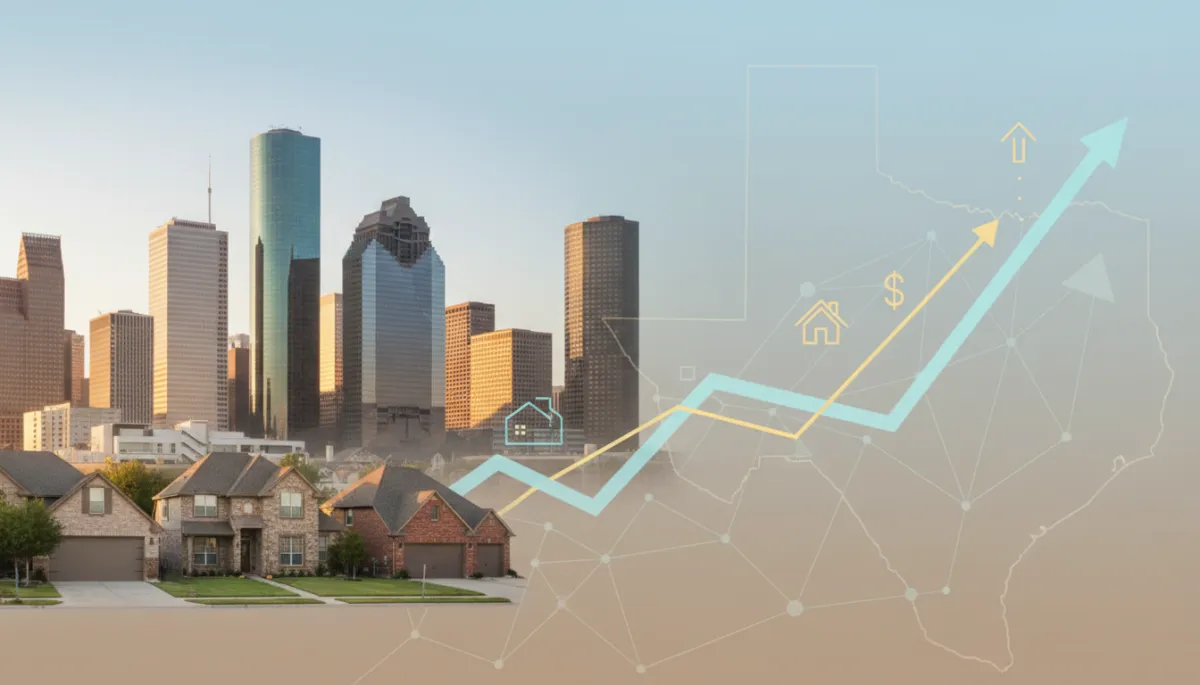
Houston’s housing market is shifting gears in 2026. After years of rapid price gains and bidding wars, the city is settling into a more balanced, sustainable rhythm—one that creates new opportunities for buyers, sellers, and investors alike.
From Frenzy to Balance: Where the Market Stands Now
The defining story of Houston real estate in 2026 is a gradual move from a hyper-competitive seller’s market toward balance. Active single-family listings have climbed sharply—Houston Association of REALTORS® data shows more than 36,000 homes on the market this spring, the highest level since 2010, with roughly 4.7 to 4.9 months of inventory available. Multiple independent reports, including Nan Properties and M/I Homes, place supply in the 4.5–4.9 month range, slightly above the national average and firmly out of “red-hot” territory.
Sales activity has cooled from pandemic highs but remains healthy. Some sources note single-family closings up around 3–4% year over year in spring, while others show a modest 7% dip by early summer. Taken together, these data points signal a market that is normalizing rather than collapsing—more give-and-take, fewer extremes, and room for negotiation on both sides of the table.
Prices: Gentle Adjustments, Not a Crash
When it comes to pricing, Houston is experiencing a soft landing rather than a steep drop. Most sources cluster the median single-family sale price between $330,000 and $345,000. HAR’s April data pegs the median around $332,000, down about 1.6% year over year, while Homes.com reports roughly $334,440 with a similar decline. InSync Homes’ June snapshot shows a median closer to $330,000, down 2% annually, underscoring a mild correction rather than a freefall.
At the same time, average sale prices in some reports have inched higher, reflecting continued strength in move-up and higher-end properties. HAR data from March, for example, shows an average single-family price above $420,000. This split—flat or slightly lower medians with steady or rising averages—suggests that entry-level and mid-range buyers are more price-sensitive, while well-positioned homes in desirable areas still command premium numbers.
Segment Spotlight: Single-Family vs. Condos and Townhomes
Not all corners of the Houston market are moving in lockstep. Single-family homes remain the backbone of local housing, with demand holding relatively steady and prices adjusting only modestly. Days on market have lengthened—most sources place the average between 60 and 76 days, up notably from the low-40s during the pandemic boom—but well-priced, well-presented homes still find buyers, especially in the $250,000–$400,000 range where InSync reports some of the fastest sales.
The condo and townhome segment tells a more complex story. Propcash data points to a sharp 11.9% year-over-year drop in median condo/townhome prices to around $185,000 earlier in the year, with supply stretching beyond seven months—clear buyer’s market territory. More recent summer updates, like those from Realty Raquel, show median prices closer to $230,000 and nearly nine months of inventory. The common thread: elevated supply and selective demand, with buyers favoring well-located, higher-quality units and negotiating hard on anything less than turnkey.
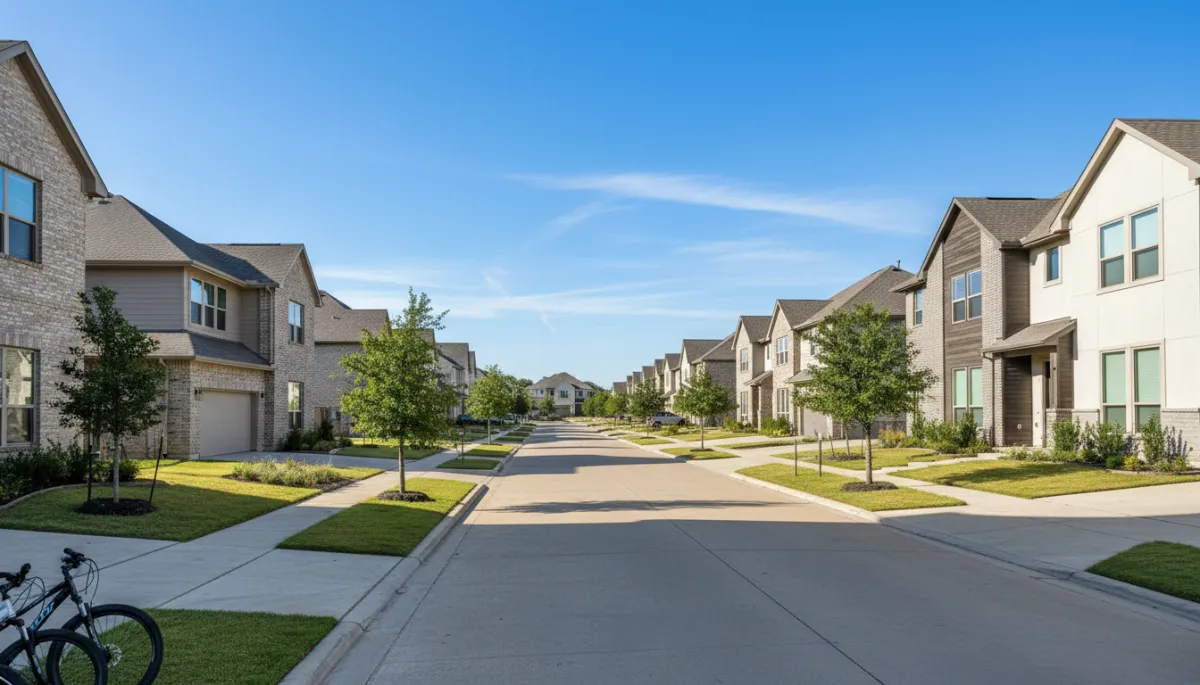
Single-family homes stay resilient while condos and townhomes see wider price swings.
Neighborhood Trends: Suburbs Surge, Inner Loop Holds Steady
On the ground, Houston’s growth story continues to play out across both suburban and urban neighborhoods. Master-planned communities in suburbs like Katy, Fulshear, Cypress, and Conroe remain magnets for families, thanks to resort-style amenities, green space, and increasingly sophisticated smart-home features. Builders have responded to years of pent-up demand, adding new inventory that gives buyers more choice—and more bargaining power—than they’ve had in a long time.
Inside the Loop, established areas such as The Heights and EaDo continue to draw steady interest from both homeowners and investors. Mixed-use projects, walkable retail, and proximity to job centers help these neighborhoods weather broader market shifts. While price growth has cooled, these pockets still feel competitive, particularly for renovated bungalows, modern townhomes, and properties near transit or future World Cup-related activity nodes.
Interest Rates, Affordability, and the Bigger Economic Picture
Mortgage rates remain a key storyline. After spiking in 2023–2024, the 30-year fixed rate has eased slightly but is still elevated by recent standards—hovering around 6.3% to 6.5% in spring and early summer 2026, according to Freddie Mac and multiple local market updates. That’s a far cry from the sub-3% loans of the pandemic, but within the longer-term historical “normal” of roughly 6–8%.
Even with higher borrowing costs, Houston’s core advantages continue to support housing demand. The metro’s diversified economy—anchored by energy but increasingly bolstered by life sciences, logistics, aerospace, and tech—helps cushion national and global volatility. Population and job growth remain positive, and compared with many coastal markets, Houston still offers relatively strong affordability, particularly for buyers relocating from higher-cost states.
What Today’s Trends Mean for Buyers, Sellers, and Investors
For buyers, 2026 may be the most favorable environment in years. More inventory, longer days on market, and fewer bidding wars translate into genuine leverage. In the popular $250,000–$400,000 price band, homes can still move quickly, but across the board, buyers now have time to compare options, negotiate repairs or concessions, and even explore incentives such as rate buydowns—especially in the condo and townhome segment where sellers are under more pressure.
Sellers, meanwhile, must adapt to a more discerning audience. The days of “list high and let the market catch up” are largely over. Accurate pricing, professional presentation, and strategic marketing are now essential. Homes that are clean, well-staged, and priced in line with recent comparable sales still attract solid offers; those that are dated or overpriced risk languishing for months and ultimately selling for less after multiple reductions.
For investors, Houston’s 2026 landscape is about selectivity and timing. Stable, in-demand neighborhoods—both inner-loop and suburban—offer long-term rental and appreciation potential, while pockets of oversupply in the condo market may present value opportunities for those willing to renovate or reposition properties. With rates still relatively high, focusing on strong cash flow and realistic hold periods is more important than betting on rapid price appreciation alone.
Looking Ahead: A Healthier, More Sustainable Houston Market
Pulling all of these threads together, Houston’s real estate trends in 2026 point toward a healthy reset. Inventory is up, prices are adjusting gradually, and the frantic pace of the past few years has given way to a more thoughtful, negotiation-friendly market. Underneath the month-to-month fluctuations, strong regional fundamentals—job growth, population gains, and a diversified economy—continue to underpin long-term housing demand.
For anyone considering a move in Houston—whether buying, selling, or investing—the key is to stay grounded in current, hyper-local data and to tailor your strategy accordingly. In this new, more balanced chapter, informed decisions and realistic expectations are your biggest advantages.