Houston Luxury Real Estate: A Hot Market in 2026
Real Estate, Houston Luxury Market, Professional Investors
Houston’s Luxury Market Is on Fire — Here’s Why Professionals Are Paying Attention
From River Oaks estates to Uptown penthouses, Houston’s luxury real estate market is not just warm in 2026 — it’s blazing. For busy professionals, executives, and investors looking for both lifestyle and long-term value, Houston is emerging as one of the most compelling luxury plays in the country.
Houston’s Luxury Market Really Is on Fire
The data tells a clear story: Houston’s high‑end segment is leading the broader housing market. In June 2026 alone, homes priced at $1 million and above recorded a 13% year‑over‑year increase in closings, with roughly 500+ luxury sales closing in a single month (HAR, 2026). HAR’s broader breakdown puts growth even higher, at 17.1% year‑over‑year for the $1M+ tier. That makes luxury the strongest‑performing price band in Greater Houston right now.
Momentum isn’t a one‑month blip either. May 2026 saw a 10.1% jump in luxury transactions, with 481 closings, and pending sales across all price points are at a four‑year high. For professionals used to watching cycles and volatility, this kind of sustained demand — especially at the top of the market — is a powerful signal of confidence and capital flow into the region.
Here’s Why: Luxury Value at a National Discount
Nationally, the entry point into the luxury market hovers around $1.2 million for the top 10% of listings (realtor.com, 2026). In the Houston–Pasadena–The Woodlands metro, that same 90th percentile threshold is closer to $794,000. Even the 95th percentile sits around $1.15 million, and the ultra‑luxury 99th percentile is approximately $2.64 million.
For professionals relocating from coastal hubs, that pricing feels almost contrarian. A $1–2 million budget in Houston typically secures about 4,000+ square feet — roughly 40% more space than the national luxury median of 2,913 square feet. In practical terms, that can mean a gated property with a pool, home office wing, gym, and guest quarters instead of a compact urban condo with limited amenities.
📌 Key Takeaway: Houston delivers “coastal‑level” luxury finishes and neighborhoods at a meaningful discount — with more square footage, land, and lifestyle baked into the price.
Neighborhoods Professionals Are Zeroing In On
Houston’s luxury story isn’t just about price points; it’s about prestige corridors that align with professional lifestyles.
River Oaks & River Oaks Area: The city’s flagship enclave, where median prices in River Oaks Proper are around $3.65 million with an average of just 30 days on market. In the broader River Oaks Area, the median is about $2.4 million and homes still move in roughly 35 days (Sotheby’s, Q2 2026). For executives, these stats translate to liquidity and long‑term brand value.
Memorial Villages & The Woodlands: June’s highest‑priced transactions clustered here, with properties trading above $6.4 million. These areas appeal to professionals seeking estate‑style living, top‑tier schools, and quick access to major employment centers.
Galleria / Uptown High‑Rises: For the lock‑and‑leave buyer, this vertical luxury corridor mirrors the energy of Miami’s Brickell. One‑bedroom units start around $375K–$475K, newer two‑bedroom residences run $1.1M–$1.8M, and penthouses push well beyond $5 million, with top listings approaching $10 million.
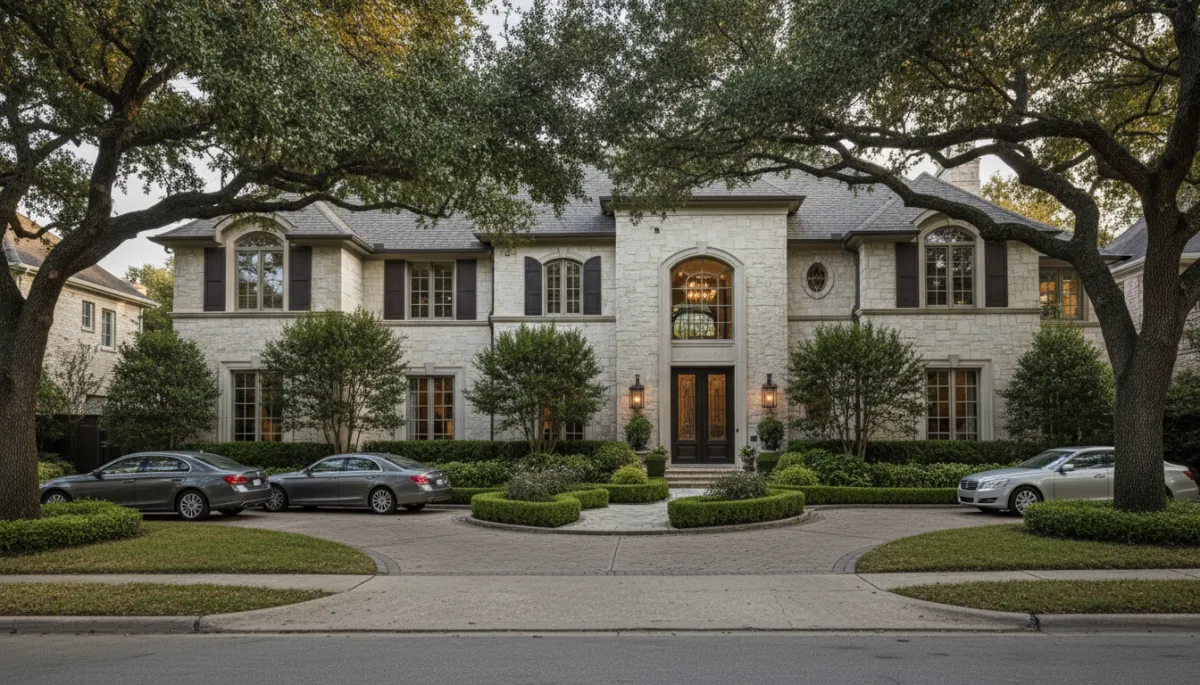
Trophy properties in River Oaks and Memorial Villages often sell within weeks, not months.
Economic Fundamentals Professionals Can’t Ignore
Unlike purely speculative boom markets, Houston’s luxury surge is anchored in real economic depth. The region’s diversified economy — spanning energy, healthcare, life sciences, logistics, and a growing tech footprint — continues to attract high‑earning professionals and corporate relocations (Greater Houston Partnership). Population growth, combined with corporate expansions, feeds steady demand for executive‑level housing.
Add in Texas’s no‑state‑income‑tax environment and Houston’s relatively low cost of living compared with New York, San Francisco, or Los Angeles, and the math becomes compelling. For many high‑income earners, reallocating to Houston effectively creates a net raise — freeing up more after‑tax income to invest in real estate, lifestyle, or additional assets.
Lifestyle, Culture, and the “Executive ROI”
For many professionals, the decision to buy luxury is as much about quality of life as it is about spreadsheets. Houston delivers on that front too. A nationally recognized dining scene, a world‑class Theater District, the Museum District, pro sports, and proximity to green spaces and the Gulf Coast all factor into the “executive ROI” calculation.
Importantly, the market is maturing, not overheating. Inventory has loosened to roughly a 5‑month supply — more balanced than the ultra‑tight conditions of prior years — yet luxury demand remains resilient. That balance creates opportunities for strategic buyers to negotiate on terms, upgrades, or closing timelines without sacrificing long‑term upside.
💡 Pro Tip for Busy Professionals: Focus on neighborhoods with strong historic resale performance and short days on market. They not only protect your downside but also preserve flexibility if your next promotion or business opportunity requires a move.
What This Means for Buyers, Sellers, and Investors in 2026
For professional buyers, Houston offers a rare combination: national‑level luxury, meaningful relative value, and economic fundamentals that still support long‑term appreciation. With 30‑year mortgage rates easing into the mid‑6% range and more inventory to choose from, 2026 is a window where you can be selective without sitting on the sidelines.
For sellers, the message is equally clear: the market is strong, but not forgiving. Well‑priced, well‑presented homes in top neighborhoods are still selling quickly and commanding premium numbers. Overreach on price or neglect presentation, and days on market can climb, even in a hot segment.
And for investors and executives thinking multi‑asset strategy, Houston’s luxury real estate functions as both a lifestyle upgrade and a diversified hard asset — one backed by job growth, demographic trends, and a tax framework that continues to attract high‑net‑worth households.
In short, Houston’s luxury market is on fire — not because of speculation, but because the fundamentals, lifestyle, and numbers all line up. For professionals willing to look beyond the traditional coastal playbook, 2026 may be the year Houston moves from “interesting idea” to “next smart move.”