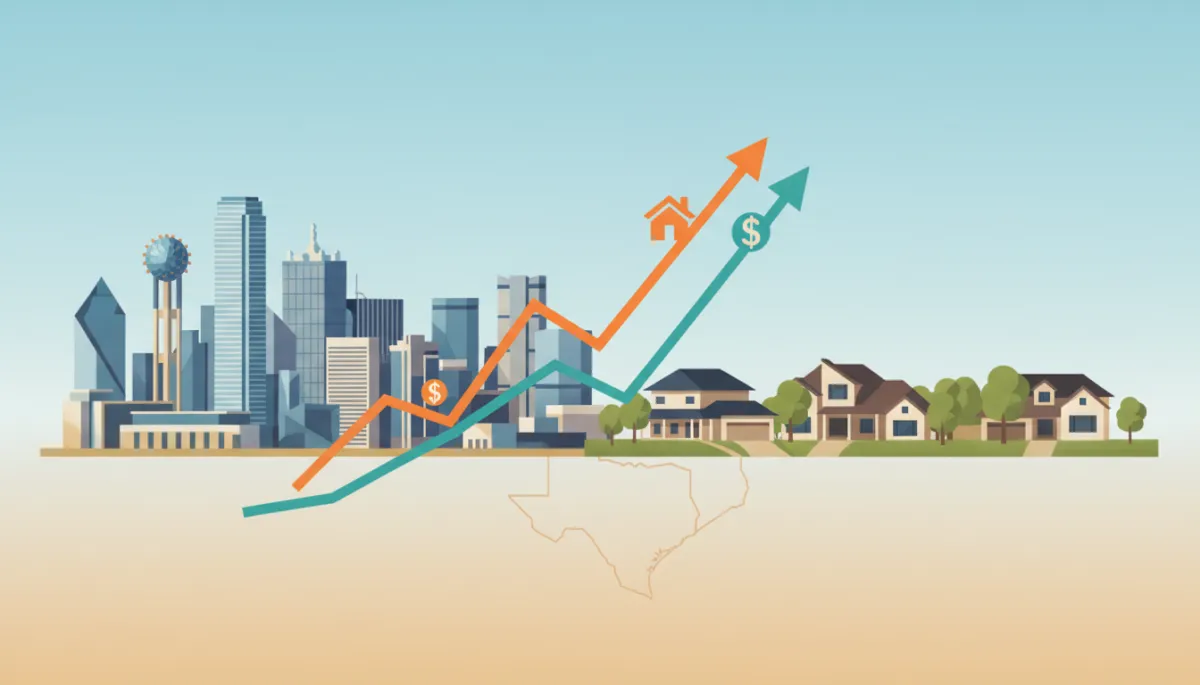
Dallas–Fort Worth Real Estate Market 2026 Outlook
Real Estate, Dallas Fort Worth Market
Dallas–Fort Worth Real Estate Market Outlook for 2026
The Dallas–Fort Worth (DFW) real estate market is shifting from a frenzied seller’s market to a more balanced, opportunity-rich landscape. With prices stabilizing, inventory rising, and demand still underpinned by strong job and population growth, 2026 is shaping up to be a year of recalibration rather than retreat.
Residential Market: From Red‑Hot to Refreshingly Balanced
Across the DFW metro, the residential market has cooled from its pandemic peak but remains fundamentally healthy. As of May 2026, the median home price sits around $395,000, up about 2.6% year-over-year, signaling modest, sustainable growth rather than a boom-and-bust cycle (Opendoor, Trading Economics). Earlier in the spring, prices dipped slightly into the $385,000–$390,000 range, a “reset” that gave buyers breathing room without undermining long-term values (DFW Agent Magazine).
Inventory has climbed, with metro listings hovering around 30,000–40,000 homes and months of supply generally between 3 and 4.5 months—still slightly favoring sellers, but far more balanced than the ultra-tight conditions of recent years (Homes.com, The Dunnican Team). Homes now spend roughly 35–55 days on market in Dallas and about 61–71 days across the wider metro, giving buyers more time to compare options and negotiate.
City‑by‑City Snapshot: Dallas, Fort Worth, and Key Suburbs
The DFW label covers a vast and varied region, and prices reflect that diversity. In Dallas proper, the median price is around $420,000, up roughly 2.4% year-over-year, with homes selling at close to 98% of list price and many still drawing multiple offers in coveted neighborhoods like Lakewood and the M Streets (Opendoor). By contrast, Fort Worth remains more affordable, with a median around $348,000 and a similar 3% annual gain—appealing to buyers seeking value without sacrificing access to jobs and amenities.
North Dallas suburbs such as Plano, Frisco, and McKinney continue to command premium prices and steady appreciation. Frisco leads the pack with median prices in the low- to mid-$600,000s and annual gains above 4%, driven by strong schools, master‑planned communities, and ongoing corporate expansion. Emerging exurbs like Prosper and Celina are seeing brisk new construction and projected appreciation in the 4–6% range, with builders offering incentives that help offset higher new‑home prices (Homes.stromation, Maligariani).
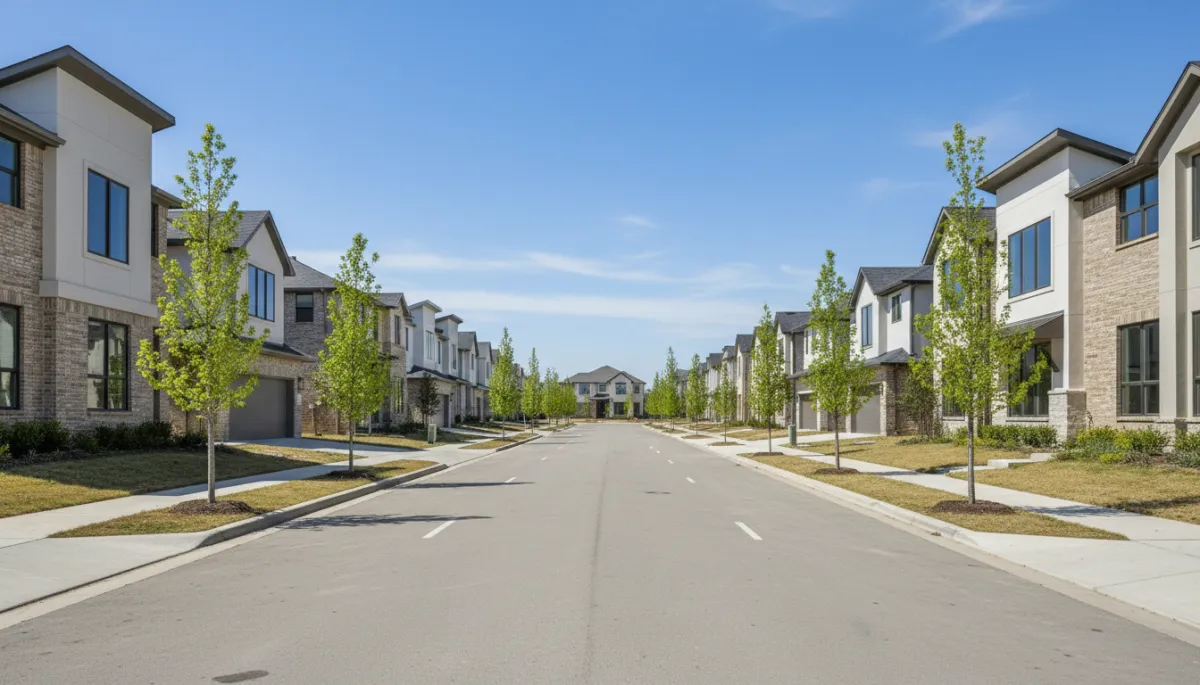
New construction in North Dallas and emerging exurbs is reshaping DFW’s housing map.
Buyer and Seller Dynamics in 2026
For buyers, 2026 brings a welcome change: more choice, slightly longer market times, and a bit more negotiating power. Sale‑to‑list ratios have softened from the peak—hovering in the 94–98% range depending on submarket—and contingent offers, closing cost credits, and inspection negotiations are again part of the conversation (Homes.com, The Dunnican Team). Mortgage rates in the 6–6.5% band still pinch affordability, but potential rate relief later in the year could unlock additional demand (Opendoor).
Sellers can no longer rely on aggressive overpricing and instant offers. Instead, success hinges on realistic pricing, thoughtful presentation, and a hyper‑local strategy. Well‑maintained, updated homes in top school zones or close‑in neighborhoods still move quickly and may attract multiple bids. Properties that are dated, overpriced, or poorly marketed are more likely to linger and require price adjustments. Overall, most forecasts call for 2–4% price appreciation across the metro through year‑end, with hotter pockets potentially seeing 5–7% gains (Homes.stromation, Propcash, NAR, Fannie Mae).
Multifamily and Commercial: Beyond Single‑Family Homes
The apartment market is working through the tail end of a major construction cycle. After a supply wave between 2023 and 2025, new starts have slowed sharply, with 2026 deliveries expected to fall below 10,000 units, roughly half of 2025 levels (Crittenden Company). Vacancy, which peaked around 12%, is projected to tighten as absorption improves and the pipeline shrinks (Cushman & Wakefield, Colliers). For investors, value‑add and workforce housing in East and South Dallas offer some of the most attractive yields, often in the 6.5–8% cap‑rate range.
On the commercial side, DFW continues to shine. Industrial real estate—especially logistics, manufacturing, and data centers—remains a standout, supported by the region’s central location and robust transportation network. Suburban office markets are seeing renewed interest in high‑quality Class A space, while mixed‑use retail developments are thriving in affluent corridors and transit‑oriented hubs (CBRE, IPA). These trends reinforce the metro’s reputation as one of the nation’s top real estate markets to watch heading into the second half of the decade (PwC, Urban Land Institute).
The Bottom Line for 2026: Reset, Not Retreat
As of early summer 2026, the Dallas–Fort Worth real estate market is best described as a reset rather than a downturn. Prices are rising modestly, inventory is healthier, and submarket differences are more pronounced than ever. Underneath it all, the fundamentals—nation‑leading job growth, strong corporate relocations, and steady population gains—remain firmly in place (HousingWire, Opendoor).
For buyers, this environment offers more options and less pressure. For sellers, it demands strategy, preparation, and local expertise. And for investors, DFW continues to present compelling opportunities across residential, multifamily, and commercial sectors—especially for those willing to look beyond the headlines and focus on neighborhood‑level trends. In short, the Dallas–Fort Worth market remains one of the country’s most dynamic real estate stories, just entering a more sustainable chapter.